 Service time
 Write to us

From Sydney to Perth: What Our Engineers Learned About the Australian Ute Canopy, Ute Tray & Service Body Market
📅 Published: July 16, 2026 · ✍️ TangHan Metal · Engineering Team · 📍 Foshan, Guangdong → Australia
We are a Foshan metal factory. We have been building ute canopies, ute trays and aluminium service bodies for the Australian market since 2008 — long enough to know that reading a spec sheet from six thousand kilometres away is not the same as watching a plumber slide a fridge into his canopy at seven in the morning outside a Bunnings car park in western Sydney.
So earlier this year, we packed our engineering team onto a plane and sent them to Australia. Not for a trade show. Not for a factory visit. Just to look, listen, and take notes. Sydney, Melbourne, Brisbane, Adelaide, the Gold Coast, and finally Perth — six cities across four time zones, all the way from the east coast surf down through the red-dirt inland and out to the Indian Ocean. What follows is the honest version of what we found.
“You cannot design for a tradie you have never met. Twelve months of email threads with a distributor cannot replace ten minutes of standing next to their ute while they load it.”— from our team lead’s notebook, day 3 in Sydney
Why We Left the Workshop
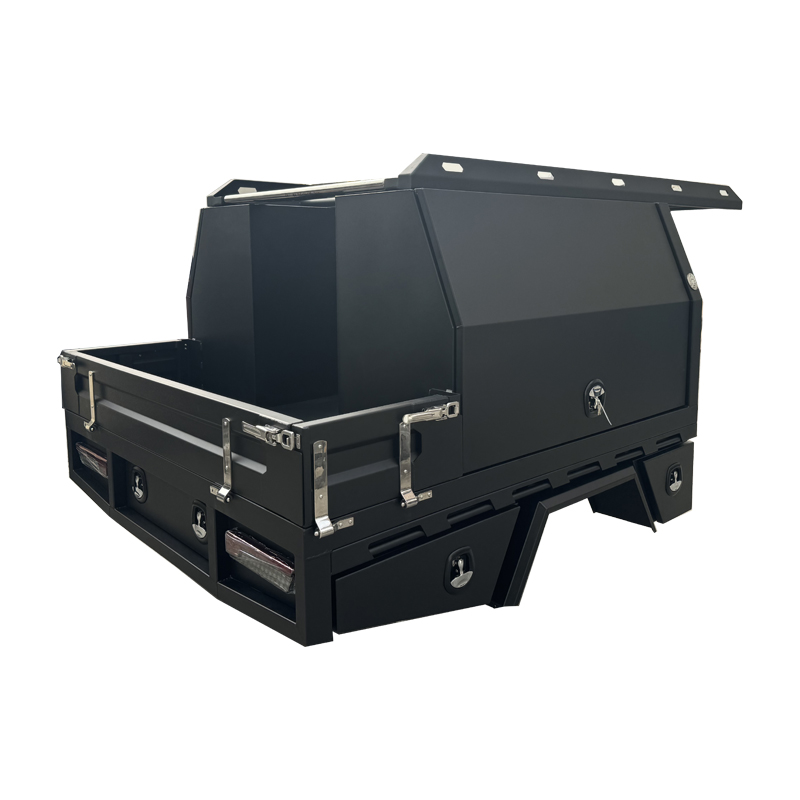
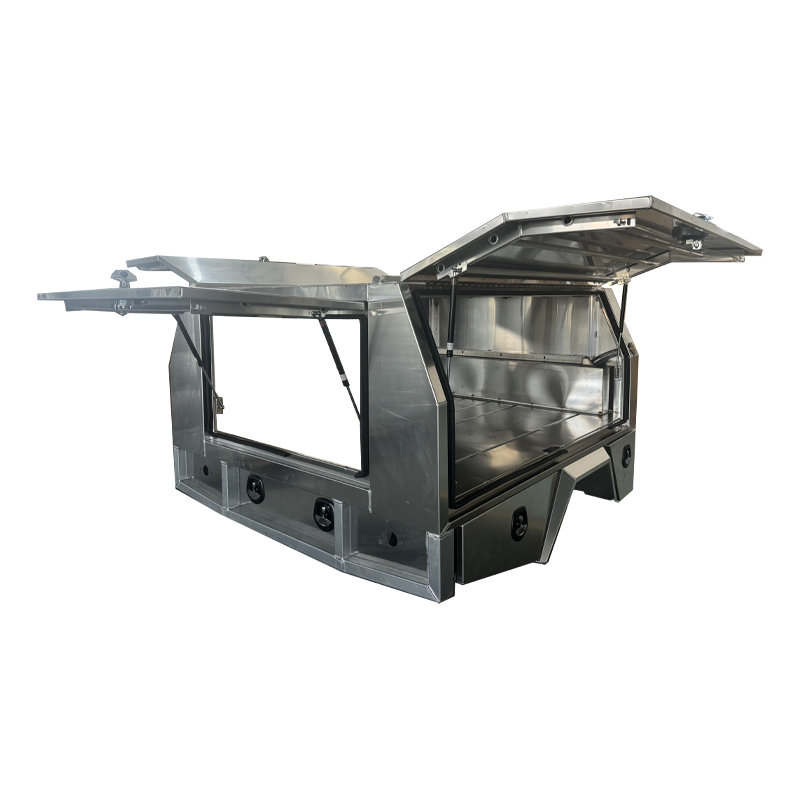
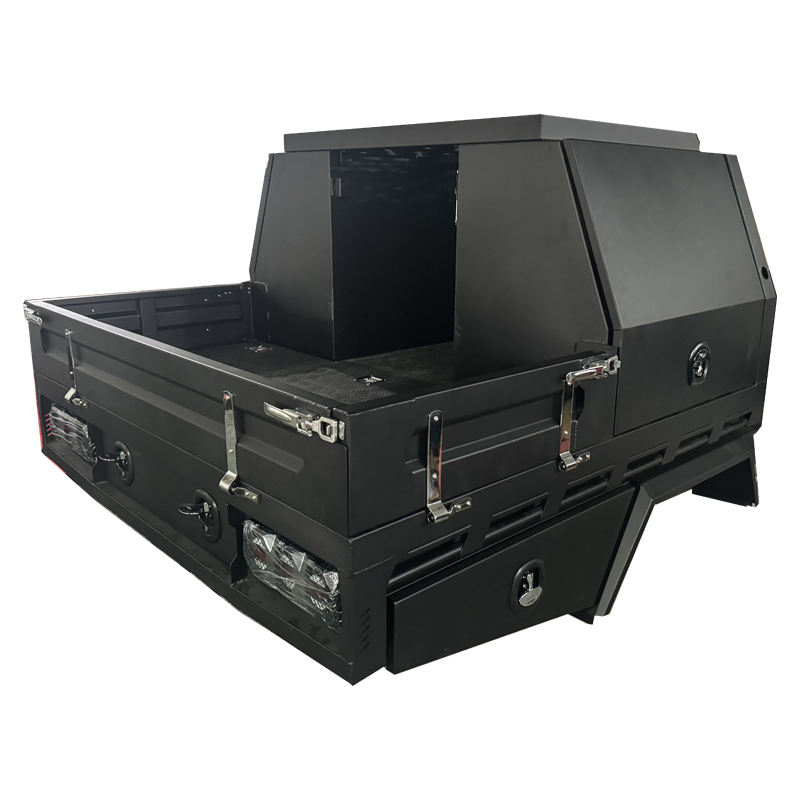
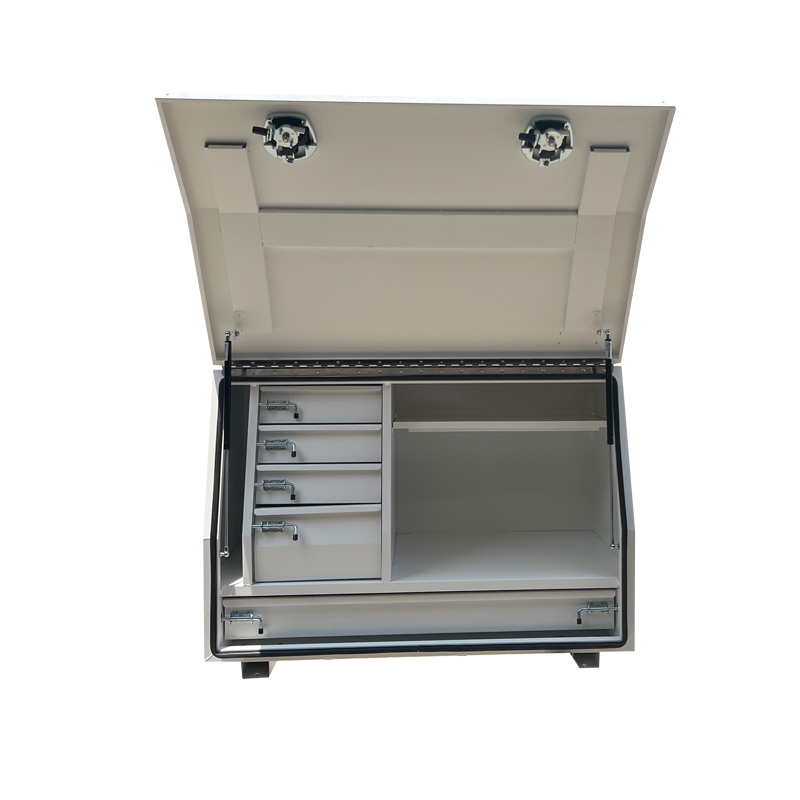
For seventeen years our factory in Foshan has focused on one thing: precision aluminium fabrication for the pickup and light-commercial vehicle sector. Trays. Canopies. Service bodies. Dog boxes. Under-tray drawers. Tool boxes. Roll bars. If it bolts onto the back of a ute or a pickup, we have probably made it. Most of that gear ends up in Australia and New Zealand — the two countries in the world where the ute is not just transport, it is an office, a workshop and, on the weekend, a camper.
But over the past two years something has been nagging at us. The Australian market is moving faster than the specs on our drawings. Dual-cab ratios are changing. Tradies are asking for canopies with 12V lithium set-ups baked in from the factory. Farmers on the Darling Downs want service bodies with slide-out generator platforms. And the after-market accessory scene down there has become one of the most sophisticated in the world.
We decided the only responsible thing to do was to stop guessing. So we drew up a route, contacted a handful of long-term Australian partners, and asked if we could just walk their workshops and shadow their fitters for a few days. Every one of them said yes.
The Route: Six Cities, One Continent
🏙️ Sydney — The Weight Question
We landed on a Sunday night and by Tuesday morning we were in a workshop out in Smithfield, watching a Sydney electrician kit out a HiLux dual-cab. The first thing he said to our engineer was blunt: “Mate, every kilo on the back is a kilo I cannot carry in the front.” That single sentence set the tone for the whole trip.
In Sydney the payload constraint is real. Tradies are hitting the GVM ceiling of their utes before their tools even go in. Every canopy we looked at had been assessed on the scales, and the ones winning market share were the lightweight aluminium ute canopies built from 1.6 mm to 2.0 mm sheet — not the heavy 3.0 mm boxes that were standard a decade ago. Our team spent an evening in a Parramatta pub sketching a new thin-wall canopy geometry on the back of a coaster. We think we can drop another 14 kg without losing rigidity.
🌧️ Melbourne — The Sealing Problem
Melbourne gave us weather. Four seasons in an afternoon, exactly as the locals warned us. We spent two days in a service-body fabricator’s shop in Dandenong, and what stood out was how much attention the good local builders pay to weather sealing on ute service bodies. Rubber profiles, drain channels, compression latches — details that a lot of imported product still gets wrong. We saw one service body that had a genuinely clever double-lip gasket on the top-opening lid; we photographed it (with permission), took the profile measurements, and it is now going into our next revision.
Melbourne also taught us something about drawers. The trades that operate across Victoria — plumbers, sparkies, refrigeration techs — treat the inside of a service body like a rolling toolroom. Full-extension bearing slides, load ratings above 100 kg per drawer, and lockable dividers are not luxury features here. They are the baseline.

☀️ Brisbane — Where the 12V World Lives
Brisbane was the eye-opener. If Sydney is about weight and Melbourne is about sealing, Brisbane is about power. Nearly every custom canopy we saw here had a 12V distribution board, a lithium battery bank, a DC-DC charger, a fridge slide, and USB-C ports built in from the start. The market has moved past “canopy plus battery box” and into fully-wired ute canopy fitouts that behave like a small off-grid cabin.
Two things stood out to our engineers. First, cable routing is a genuine craft — the best local installers keep looms inside grommeted internal channels so nothing chafes on a corrugated road. Second, the ventilation on lithium enclosures is not being taken seriously enough by cheaper imported product. That is a design responsibility we are taking home. Our next generation of aluminium ute canopy will offer factory-cut ventilation panels and a pre-wired accessory loom option as standard, not as an after-thought.
🍇 Adelaide — Where Trays Get Punished
We drove north-east out of Adelaide into the Barossa on a Thursday morning. The vineyard fleets here run their utes like Formula 1 pit vehicles — hundreds of short trips per week, every day of the year. Trays get abused. Corners get dinged. Powder coats chalk under the SA sun. What the fleet managers wanted to talk about was not features, it was lifetime cost: how long does the coating actually last, how repairable is a damaged side panel, can they replace a single drop-side without pulling the whole tray off.
This is where being a source factory matters. When a customer walks up and asks “can I get five spare side panels in six weeks?”, the answer needs to be yes. Anyone in the middle of the supply chain has to say maybe. We are trying very hard to always say yes.

🏄 Gold Coast — The Weekend Warrior
The Gold Coast leg was where the trip stopped being about work and started being about lifestyle. Half the utes on Marine Parade at 6 am are surfers’ rigs. The other half are heading up to the hinterland for a weekend of camping. Here the buyer profile is different — the ute is a touring platform, and the canopy has to double as a weatherproof cabin for a family of four somewhere near Springbrook.
We came away convinced there is a real product opportunity here: a ute canopy camping setup that ships with pre-drilled mounts for awnings, jerry cans, water tanks and a rooftop platform, out of the box. Fewer aftermarket brackets. Cleaner install. Better resale value.
⛏️ Perth — The Mining Spec
Perth was the final stop, and in many ways the toughest brief. Western Australia’s mining fleets buy service bodies by the hundred, and they write specifications that read like military procurement documents. Isolation switches. Fire extinguisher mounts. Reflective compliance markings. Rated tie-down points with test certificates. Coating systems that will not fail after two years on an unsealed mine access road.
What we learned in Perth is that the WA mining market is not asking for exotic features. It is asking for documented reliability. Certified welds. Traceable material batches. Powder coating that meets AS 3715. As a source factory with full in-house welding, coating and QC, we can supply the paperwork to back up the product — and that is now going to be part of every quotation we send into WA.
Six Patterns We Kept Seeing
- Weight is now a design KPI, not a footnote. Every kilogram of empty canopy comes off payload. Aussie tradies notice.
- Sealing details are what separates a $2K canopy from a $6K one. Gaskets, drainage, latch compression.
- 12V and lithium are baseline, not upgrades. The Australian market has moved past “bring your own battery box”.
- Powder coat that survives the UV is a competitive weapon. AS 3715:2025 compliance is not optional.
- Modularity beats one-size-fits-all. Owners want to replace a panel, not the whole product.
- Documentation matters as much as the product. Especially in WA mining and government fleets.
Who We Are — And Why Any Of This Matters
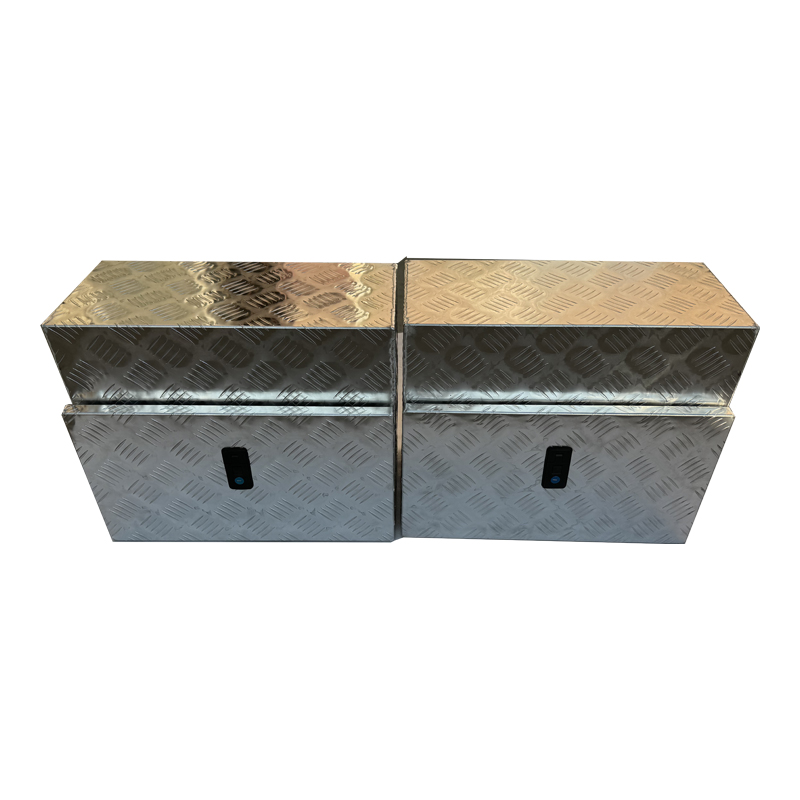
Foshan TangHan Precision Metal Products Co., Ltd was founded in 2008 in Foshan, Guangdong — the metal-fabrication capital of southern China. What started as a small sheet-metal workshop has grown into a source factory specialising in aluminium and steel products for the pickup, ute and light-commercial vehicle market. Today our workshop runs to Japanese production management standards, our laser cutting and bending equipment is imported from Germany and Japan, and roughly 70% of what we build every month ships into Australia, New Zealand and North America.
Our core product lines are the ones that were the reason for this trip:
Why Australian Buyers Work With Us
What We Are Taking Back To Foshan
We came home with three notebooks, several thousand photographs, roughly twenty pages of hand-drawn sketches, and a much clearer sense of what the Australian ute owner actually wants in 2026. The next twelve months of our product roadmap are already being rewritten around what we saw and heard. Lighter shells. Better gaskets. Pre-wired 12V options. Modular replacement panels. Full documentation packs. And a service model that finally reflects the fact that our best customers are on the other side of the equator, in a time zone where the working day starts when ours is ending.
If you are an Australian brand, distributor or fleet buyer looking for a manufacturing partner who has actually stood in your yard and watched your fitters work — we would love to talk. This trip was not a marketing exercise. It was our engineering team doing their homework. The next step is turning that homework into product on your ute.
Whether you need a single custom ute canopy or a full ODM ute accessory line for your Australian brand — our engineers are ready to help you build it right the first time.
Request a Quote → Browse Ute Range— The Engineering Team, TangHan Metal · Foshan, Guangdong