 Service time
 Write to us
The Hexagon Effect: Why Our Aluminum Ute Dog Box Borrows a Page from Football
Jul 05, 2026
Product Design · Outdoor Lifestyle · Pet Safety
The Hexagon Effect: Why Our Aluminum Ute Dog Box Borrows a Page from Football
A honeycomb ventilation pattern, a World Cup obsession, and a simple question: how do you build a ute dog box that keeps your best mate cool from the Kimberley to the King Country? The answer, it turns out, has been on a football all along.
Every four years, the world stops for the same reason. Ninety minutes on a field, a stitched leather ball, and a pattern so familiar most people never look at it twice: the black-and-white hexagons of a classic football. But if you take a closer look at our aluminum ute dog box, you will notice the same six-sided geometry laser-cut into every panel. It is not decoration. It is engineering — and the World Cup is a surprisingly good reason to talk about why.
A Shape Older Than the Game Itself
Long before footballers wore boots, honeybees were building hexagons. A honeycomb is nature’s most efficient way to enclose the largest area with the least material. Aircraft engineers use it inside wings. F1 designers use it in monocoques. And in the 1970s, the makers of the iconic Adidas Telstar football chose the hexagon because it gave the ball a truer, more balanced flight than any other tessellating shape.
We chose it for a different reason: airflow. When a dog sits inside a sealed metal enclosure on a 38-degree Australian summer day, the single most important thing you can give them is moving air. Round holes waste material. Squares create sharp weak points. But a repeated hexagonal pattern, laser-cut into 2.0 mm marine-grade 5052 aluminum, gives us the highest possible open-area ratio without compromising the structural rigidity of the panel. It is the same reason bees have been doing it for 100 million years — and the same reason boat builders trust 5052 alloy in the salt spray of the Southern Ocean.
Cutting a hexagon into aluminum is easy. Cutting it safely is not. Every laser edge and every folded seam on this dog box passes through our most advanced automated deburring line, which removes the microscopic burrs, sharp lips, and slag that ordinary fabricators leave behind. When your dog rests a paw against a vent, the metal is smooth to the touch — because nothing about their comfort should be left to chance.

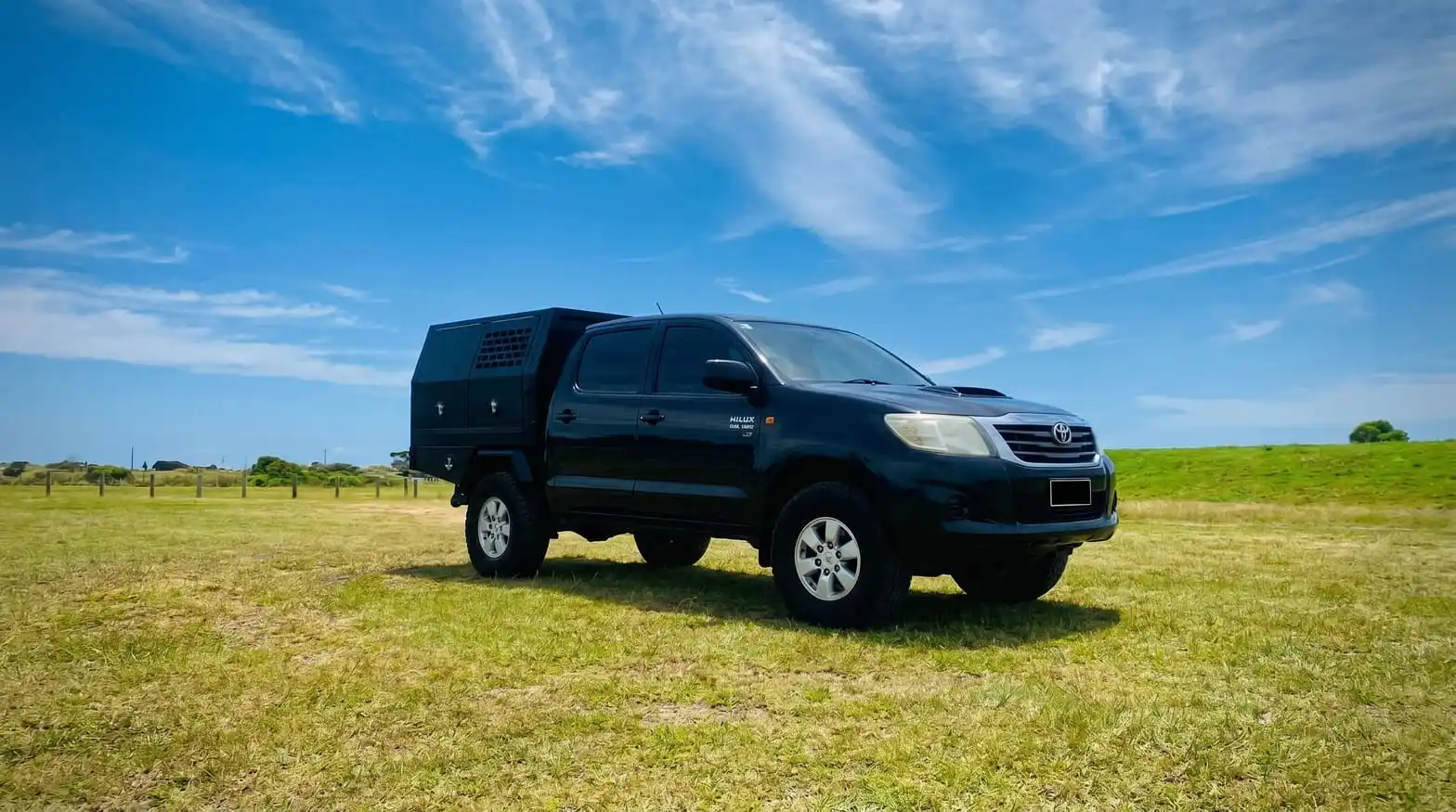
The Honeycomb Series — hexagonal cutouts on every panel maximise cross-ventilation without sacrificing the structural integrity of the aluminum shell.
The World Cup Connection: When Sport Meets Engineering
Australian and Kiwi supporters know the World Cup better than most. From the Socceroos’ legendary 2006 campaign to the All Whites’ famous unbeaten group stage in South Africa 2010, this is a sport that both nations love with quiet, deep passion. And every time a match kicks off, millions of eyes track that same repeating hexagon.
When our design team in Foshan first sketched the ventilation grid for this dog box, someone in the room said it out loud: “It looks like a football.” That was the moment the idea locked in. A shape that a farmer in Toowoomba or a hunter near Rotorua would instantly recognise. A shape that already carries meaning — teamwork, endurance, the outdoors. A shape that, quite literally, was chosen by the best engineers in sport for exactly the same reason we chose it: efficiency under pressure.
“Good design does not ask to be noticed. It just quietly makes the thing work better. A dog box built with the same geometry as a World Cup football is not a gimmick — it is a small tribute to a very old idea done well.”
— From the workshop floor, TangHan Metal FoshanThree Things the Hexagon Does Better
Hexagonal cutouts deliver up to 40% more open surface area than equivalent round-hole patterns, keeping dogs cool on long drives across the outback or through the North Island bush.
The honeycomb geometry naturally distributes load across every edge. The aluminum panel stays rigid and impact-resistant even after aggressive weight reduction — the same principle used in aerospace.
A repeating hexagonal grid is instantly recognisable and quietly premium. Your ute stands apart in the car park without shouting for attention — the way good gear should.
Made for the Aussie and Kiwi Way of Life
Dogs in Australia and New Zealand are not passengers. They are partners. Working kelpies on cattle stations. Retrievers waiting patiently at duck-shooting hides. Family Labs riding along on the weekend camp run. In both countries, transporting a dog safely and comfortably in the back of a ute is a daily reality — not an occasional errand.
That reality shaped every detail of our aluminum ute dog box. The 5052 marine-grade shell shrugs off salt corrosion from coastal drives along the Great Ocean Road or the Coromandel. The exterior powder coating is applied to Australian Standard AS 3715:2025 — the same specification used for architectural aluminum facades that must survive decades of Australian UV. That means colour that holds, gloss that lasts, and a finish that will not chalk or fade after one hard summer in the sun. Lockable latches, drainage channels, and fully deburred internal edges are not upgrades — they are standard, because on this side of the world nothing else makes sense.
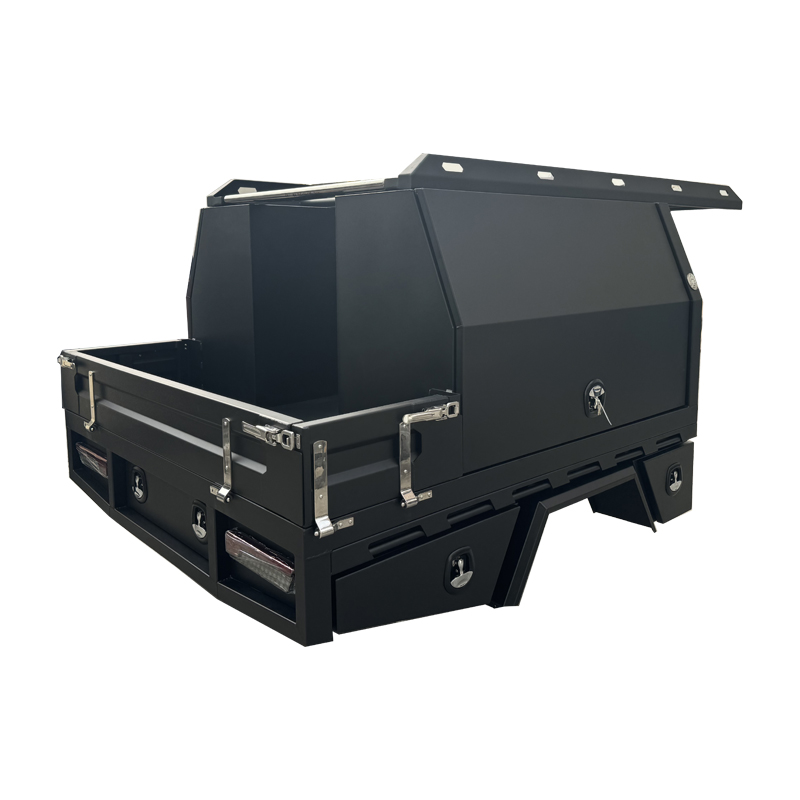
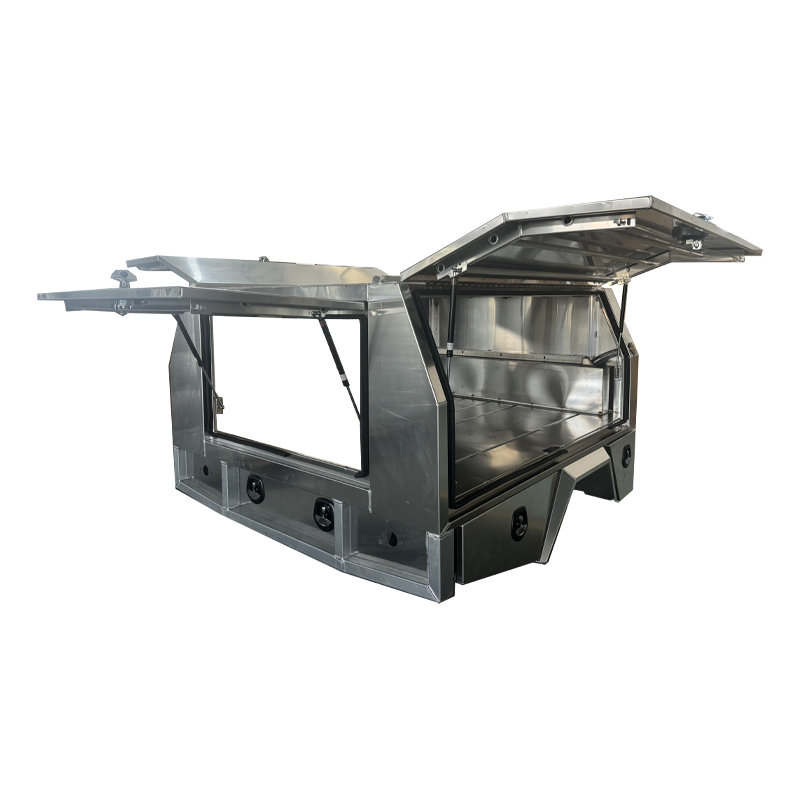
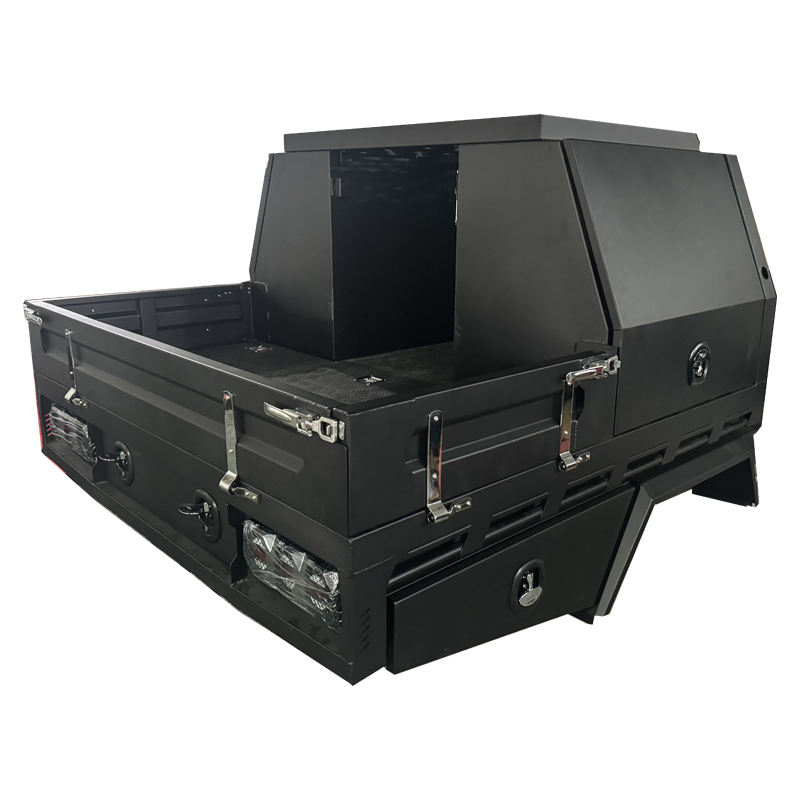
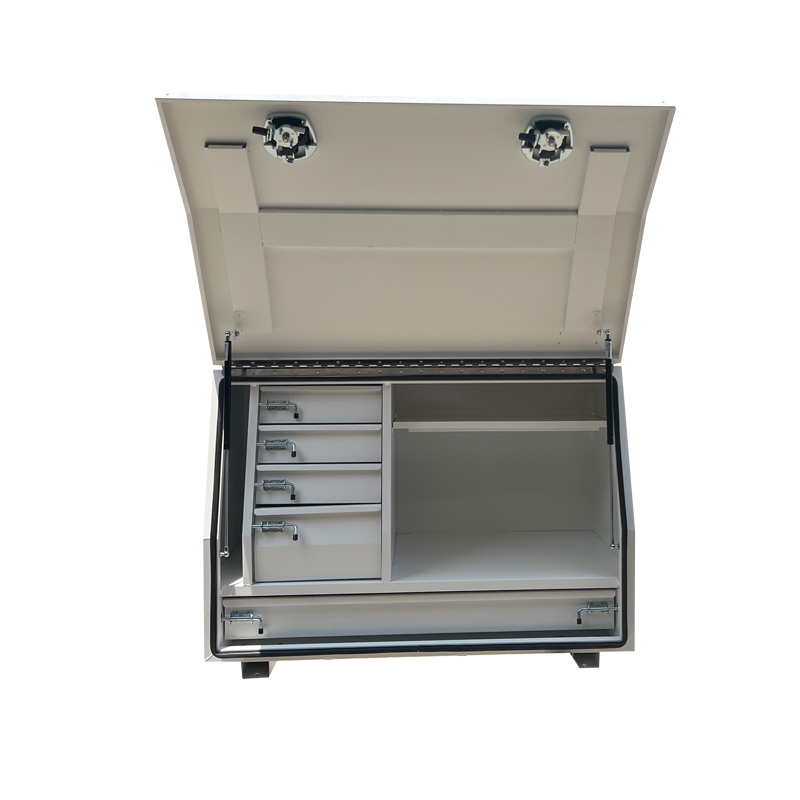
The dog box is one member of a larger family. Because most working utes carry more than just a dog, we build the entire tray-back ecosystem to match — so the same fit, finish, and coating standard runs from cab to tow bar.
Field Note
According to Animal Medicines Australia, more than 6.4 million households in Australia own a pet, with dogs making up the largest share at around 48%. In New Zealand, Companion Animals NZ estimates 34% of households live with at least one dog. For a huge portion of these owners, the ute tray is where the dog lives on the road. Getting that space right is a matter of everyday welfare, not luxury.
Foshan Craft, Southern Hemisphere Grit
We build every dog box in Foshan, Guangdong — a city where metal fabrication is not an industry but a heritage. Our engineers spend months refining a single hinge geometry. Our welders inspect every seam under raking light before it leaves the workshop. This is the same craftsmanship culture that has been shaping Chinese precision manufacturing for generations, now directed squarely at a very specific problem: how to keep an Aussie kelpie or a Kiwi Lab safe, cool, and comfortable in the back of a hard-working ute.
The hexagon on a football is a symbol of a game the whole world plays together. The hexagon on our dog box is a small nod to the same idea — that great design travels. From bees to Adidas, from Foshan to the paddocks of New South Wales and the coastlines of the Bay of Plenty, the shape works. It is doing something useful. And that, in the end, is what good engineering ought to be.
The Honeycomb Series · Aluminum Ute Dog Box
Built on the Same Shape
That Won the World Cup.
To every tradie, farmer, hunter, and weekend adventurer across Australia and New Zealand: your best mate deserves gear engineered as thoughtfully as the ball on the pitch. From our workshop in Foshan to your ute in the Southern Hemisphere — the hexagon travels well.
— TangHan Metal · Precision that Protects